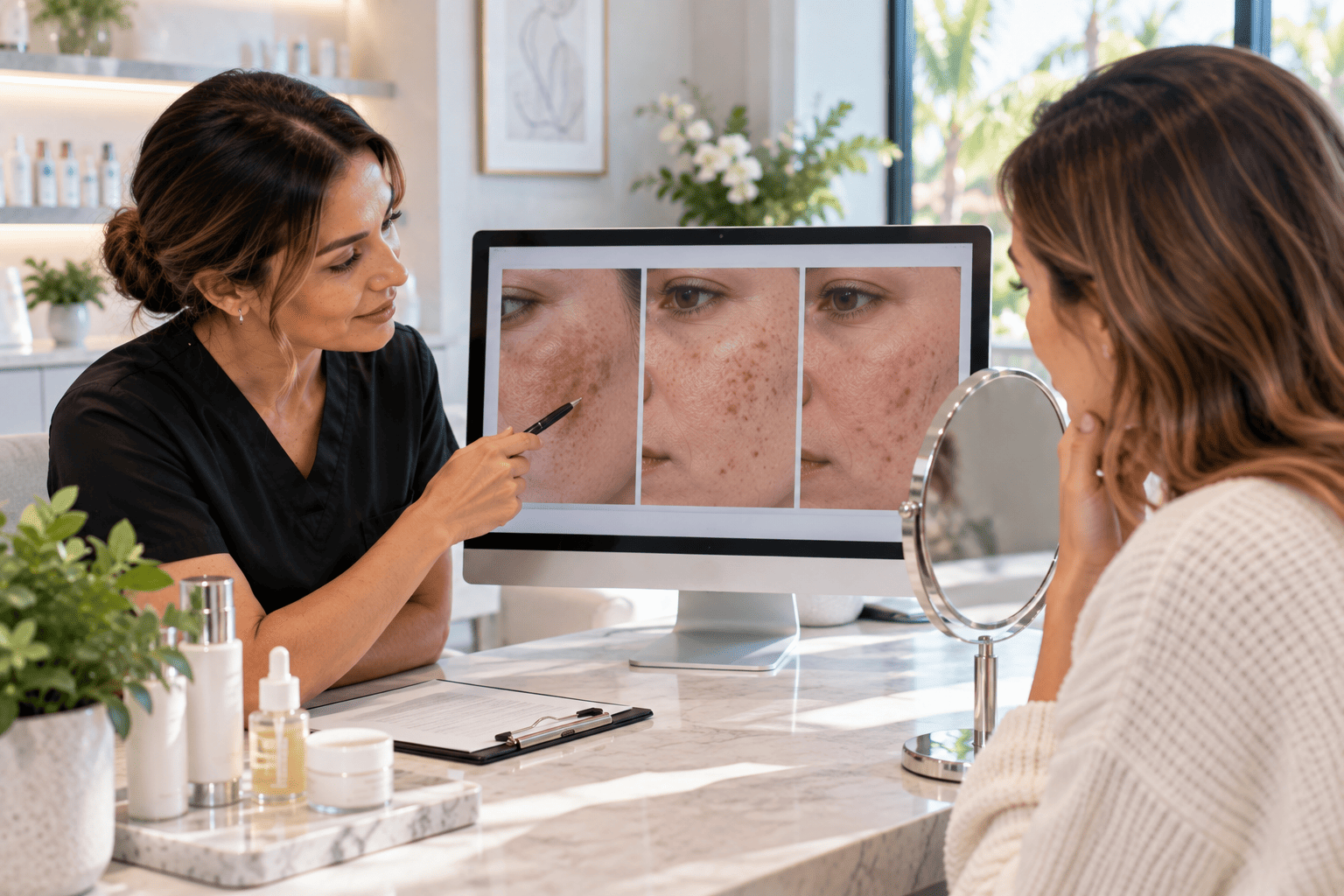
Melasma, Sun Spots, or Acne Marks? How to Tell Your Hyperpigmentation Apart
Not all discoloration is created equal, even though it often gets lumped together under one umbrella term. Hyperpigmentation is a general name for several different conditions that look somewhat similar but behave very differently under treatment. If you live in Crystal River, Florida and have been trying every serum on the shelf without much change, there is a good chance you are treating the wrong type of pigmentation for what is actually happening in your skin.
What Is Hyperpigmentation, in Plain Terms?
Hyperpigmentation simply means patches of skin that have become darker than the surrounding area due to excess melanin production. It is not one condition but a category that includes several distinct causes, each with its own pattern, trigger, and ideal treatment approach.
The Three Most Common Types of Hyperpigmentation
Melasma
Melasma typically appears as larger, symmetrical patches across the cheeks, forehead, upper lip, or chin. It is driven primarily by hormonal changes, which is why it shows up so often during pregnancy or with certain birth control use, and it tends to worsen with sun and heat exposure. Melasma is notoriously more stubborn than other forms of pigmentation and can rebound if treated too aggressively.
Sun Spots (Solar Lentigines)
These are small, well-defined dark spots caused by cumulative UV exposure over the years. Unlike melasma, sun spots are not hormonally driven and tend to respond more predictably and quickly to resurfacing treatments.
Post-Inflammatory Hyperpigmentation
This type forms after any kind of skin injury or inflammation, most commonly acne, but also cuts, bug bites, or irritation from harsh products. It shows up exactly where the original blemish or injury was, and it usually fades faster than melasma once the underlying inflammation is controlled.
How Can You Tell Which Type You Have?
Pattern and history are the biggest clues. Symmetrical patches that seem to appear or worsen with hormonal changes point toward melasma. Small, scattered spots on sun exposed areas like the cheeks, shoulders, and hands usually indicate sun damage. Marks that appeared exactly where a pimple or scrape used to be are almost always post-inflammatory. When in doubt, a professional skin assessment during a consultation is far more reliable than guessing based on an internet search.
Why Does the Type of Hyperpigmentation Matter for Treatment?
This is the part most people miss. Melasma can actually worsen with treatments that are too aggressive or heat generating, since inflammation is one of its biggest triggers. Sun spots and post-acne marks generally tolerate more active resurfacing treatments well. Choosing a treatment without knowing which category you are dealing with is one of the most common reasons people feel like "nothing works" on their pigmentation.
Hyperpigmentation Treatment Options in Crystal River, Florida
At Glow and Grace Aesthetics in Crystal River, treatment plans are built around identifying your specific type of pigmentation first, rather than applying a single generic protocol to every client.
Factor 5 RDS Collagen Remodeling Peel
The Factor 5 RDS Collagen Remodeling Peel is often recommended for sun spots and post-acne discoloration, resurfacing the skin's surface layers to fade existing pigment.
SkinPen Microneedling
SkinPen Microneedling can help with textural post-acne marks and general tone improvement by encouraging fresh, more evenly pigmented skin cell turnover.
HydraCool Restore HydraFacial
For melasma-prone or more reactive skin, the HydraCool Restore HydraFacial offers a gentler, cooling approach that supports tone improvement without the heat or intensity that can sometimes aggravate hormonally driven pigmentation.
Why Melasma Needs a More Cautious Approach
Because melasma is so closely tied to inflammation and heat, aggressive treatments can occasionally trigger a rebound that leaves the pigmentation looking worse than before treatment started. This is why a more conservative, gradual protocol, often paired with strict sun avoidance and gentle cooling based treatments, tends to produce steadier long term improvement than trying to fade melasma as quickly as possible. Patience genuinely matters more with this type of pigmentation than with sun spots or post-acne marks.
What Should a Hyperpigmentation Consultation Actually Cover?
A thorough consultation should look at where your pigmentation is located, how long it has been there, whether it changes with sun or hormones, and your skin's overall sensitivity before recommending a treatment path. If a provider recommends the same peel to every client regardless of pigmentation type, that is a sign to ask more questions.
Can Hyperpigmentation Affect Any Skin Tone?
Absolutely. While the appearance of hyperpigmentation can look different depending on natural skin tone, from reddish brown to deep gray or violet toned patches, the underlying causes remain the same across all skin types. What does change is treatment sensitivity, since deeper skin tones can be more prone to a temporary darkening reaction from certain treatments if they are too aggressive, which is exactly why an individualized approach matters so much here.
How Long Does Hyperpigmentation Treatment Take to Work?
Sun spots and post-acne marks often show visible improvement within a few sessions. Melasma requires a slower, more conservative approach and consistent sun protection, since rushing treatment can sometimes trigger a rebound. Setting realistic expectations upfront makes the whole process far less frustrating.
The Non-Negotiable: Sun Protection
Every single type of hyperpigmentation is made worse by unprotected UV exposure. In a place like Crystal River, where sunshine is part of daily life, a broad spectrum SPF is not optional if you want treatment results to actually last.
What Role Do Heat and Humidity Play in Crystal River Specifically?
Beyond direct sun exposure, the heat and humidity common to Crystal River can also aggravate melasma by increasing skin temperature and inflammation, even on days without direct sun. Many residents notice their pigmentation looks slightly darker or more prominent during the hottest, most humid stretches of the year, which is a helpful clue when trying to identify melasma versus other forms of discoloration that do not fluctuate with weather in the same way.
FAQs About Hyperpigmentation
What is the difference between melasma and regular hyperpigmentation? Melasma is a specific hormonally driven form of hyperpigmentation that appears as larger, symmetrical patches, while general hyperpigmentation can also include sun spots and post-acne marks that are not hormonally triggered.
Can hyperpigmentation be treated permanently? Existing pigmentation can often be significantly faded, but ongoing sun protection is necessary to prevent new hyperpigmentation from forming, especially for melasma-prone skin.
Is melasma harder to treat than sun spots? Generally, yes. Melasma tends to be more resistant to treatment and more prone to recurrence than sun spots, which usually respond more predictably to resurfacing treatments.
Does Glow and Grace Aesthetics treat hyperpigmentation in Crystal River? Yes. The Crystal River location offers RDS peels, microneedling, and hydrating facials tailored to different types of hyperpigmentation.
Know Your Spots Before You Treat Them
Hyperpigmentation is not a one size fits all concern, and treating it like one is exactly why so many people feel stuck. Once you know whether you are dealing with melasma, sun damage, or post-acne marks, choosing the right path forward becomes far less guesswork and a lot more strategy.
If your discoloration has not responded to what you have tried so far, schedule a consultation with Glow and Grace Aesthetics in Crystal River and get an actual answer about what is going on beneath the surface.

