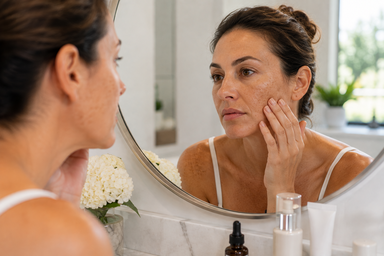
Why Do Sun Spots and Rough Texture Keep Showing Up on Your Skin, and What Actually Fixes Them?
If you live along the Nature Coast, you already know the sun here does not play around. Between the boat days, the paddleboarding, and the simple fact that Crystal River sees sunshine most of the year, your skin is working overtime just to keep up. Maybe you have noticed a few new spots on your cheeks that were not there last summer. Maybe your skin feels rougher than it used to, even with a good moisturizer. If any of that sounds familiar, you are not imagining it, and you are far from alone.
This guide walks through why sun exposure, aging, and hormones team up to create the discoloration and texture changes so many Crystal River residents deal with, and how a derma peel can address the problem at its source rather than just masking it. Updated for August 2026, this is everything you need to know before your next skincare decision.
Why Do Dark Spots and Discoloration Show Up on Sun-Exposed Skin?
Dark spots, sometimes called sunspots or age spots, form when ultraviolet light triggers your skin to produce extra melanin as a defense mechanism. Over time, that melanin does not always distribute evenly. Instead, it clusters into the flat brown or tan patches you see on the cheeks, forehead, chest, and hands, especially in people who spend a lot of time outdoors.
Living near the Gulf means near constant exposure to reflective light off the water, on top of direct sun. Even with sunscreen, most people miss reapplication windows during a full day on the boat or at the springs. That cumulative exposure adds up year after year, which is why discoloration tends to become more noticeable in your thirties, forties, and beyond, even if you were diligent about sunscreen more recently.
Hormonal shifts can also play a role. Pregnancy, birth control, and changes during perimenopause can trigger melasma-like patches that look similar to sun damage but respond a bit differently to treatment. Either way, the underlying skin cells need help turning over faster to clear out that excess pigment.
What Causes Uneven Texture and Rough Skin in Florida's Climate?
Texture changes are a different story, though they often show up alongside discoloration. Humidity, salt air, and sun exposure all affect how quickly your skin cells shed and renew. When that process slows down, dead skin cells build up on the surface, leaving skin looking dull, feeling rough, and appearing less reflective of light.
Add in years of sun exposure and the collagen breakdown that comes with it, and you get a combination of enlarged pores, fine lines, and an uneven surface that no amount of exfoliating scrub seems to fully smooth out. Acne scarring from past breakouts can compound the issue too, leaving textural dips and unevenness that flat lighting makes obvious.
For a lot of people in Crystal River, this shows up as a general sense that their skin looks tired even when they feel fine. That is usually a sign the outer layers of skin need more than a surface level refresh.
Who Is Most at Risk for Sun Damage and Premature Aging?
Some risk factors are simply out of your hands, like fair skin, family history, or age. Others are tied directly to lifestyle and location.
- Frequent time on the water, whether fishing, boating, or kayaking around the springs
- Daily outdoor commutes or work that keeps you in direct sunlight for hours
- A history of sunburns, especially blistering burns in childhood or your twenties
- Inconsistent sunscreen use or skipping reapplication during long outdoor days
- Hormonal changes from pregnancy, birth control, or age
None of this means damage is inevitable. It just means Crystal River living calls for a proactive skincare approach, and for many people, professional treatment eventually becomes part of that plan.
When Should You Consider a Professional Peel Instead of At-Home Products?
At-home serums and exfoliants can help maintain skin between treatments, but they are formulated to be gentle enough for daily use without professional supervision. That means they often cannot reach the depth needed to meaningfully fade established sun spots or resurface rougher texture.
If you have tried drugstore or even higher end retail products for several months without real improvement, that is usually the signal that it is time for something stronger. A professional treatment can deliver a more controlled, deeper level of exfoliation in a single session than months of at-home care, which is exactly where a derma peel comes in.
How Does a Derma Peel Work to Resurface Skin?
A derma peel uses a targeted blend of acids to remove the damaged outer layers of skin, encouraging fresh, evenly toned skin to surface underneath. As those top layers shed over the following days, so does much of the visible sun damage, discoloration, and rough texture sitting on the surface.
At Glow and Grace Aesthetics in Crystal River, we offer The Perfect Derma Peel, a treatment designed to address sun damage, hyperpigmentation, and uneven tone with minimal downtime compared to older generation peels. For clients looking to also improve firmness and collagen quality, we pair this well with the Factor 5 RDS Collagen Remodeling Peel, which works on a slightly different level of the skin to support long term texture and tone improvement.
Both treatments work by prompting your skin to essentially reset its surface layer, which is why results often continue to improve for several days after your appointment as peeling completes and new skin settles in.
Who Is a Good Candidate for a Derma Peel?
Most adults dealing with sun spots, dull texture, mild acne scarring, or early signs of uneven tone are good candidates for a derma peel. It tends to work particularly well for people who have already tried consistent at-home skincare and want a more noticeable, faster result.
That said, not every peel is right for every skin type or concern, which is why we always start with a conversation first. Active pregnancy, certain skin conditions, and recent sun exposure can all affect timing or the type of peel that makes sense. A quick 30-minute consultation is the easiest way to find out what your skin actually needs before committing to a treatment plan.
What Should You Expect During Recovery After a Derma Peel in Crystal River?
Recovery varies depending on the depth of peel, but most clients see some visible peeling or flaking within two to five days as the treated layer sheds. Skin may feel tight or look slightly pink for a short period immediately afterward, which is completely normal.
Because Crystal River living means sun exposure is nearly unavoidable, sun protection becomes especially important during the week or two following treatment. Freshly resurfaced skin is more vulnerable to UV damage, so a broad spectrum sunscreen and a bit of shade planning go a long way in protecting your results. Most people are comfortable returning to normal routines within a few days, making it realistic to fit a peel into a regular schedule without major disruption.
Glow Up, Not Just Cover Up
At the end of the day, concealer and filters can only do so much. If sun spots, dullness, or rough texture have been bothering you, the real fix starts with resurfacing the skin itself, not hiding what is underneath. A derma peel gives your skin the chance to shed what is not serving it anymore and reveal something brighter, smoother, and more even in tone.
If you are ready to talk through your options, our team at Glow and Grace Aesthetics in Crystal River would love to help you figure out the right approach for your skin. Reach out through our contact page or browse our current specials to get started.
Frequently Asked Questions
How many sessions does it take to see results from a derma peel? Many clients notice visible improvement in tone and texture after just one derma peel, though a series of treatments spaced several weeks apart tends to produce the most complete results for stubborn sun damage or discoloration.
Is a derma peel safe for sensitive or fair skin common in Florida? Yes, though the right type and strength of peel matters. During your consultation, we assess your skin type and sun exposure history to recommend a peel that resurfaces effectively without unnecessary irritation.
Will a derma peel help with melasma or hormonal discoloration? Peels can improve the appearance of melasma-like patches by encouraging even cell turnover, though results vary since hormonal pigmentation can be more stubborn than sun-related spots alone. We can discuss realistic expectations during your visit.
How soon can I be back in the sun after a derma peel in Crystal River? Light daily activities are fine right away, but direct sun exposure should be limited and sunscreen should become non-negotiable for at least one to two weeks while new skin surfaces.
What is the difference between The Perfect Derma Peel and the Factor 5 RDS Peel? The Perfect Derma Peel focuses primarily on resurfacing, tone, and pigmentation, while the Factor 5 RDS Collagen Remodeling Peel is designed to also support collagen quality and firmness. Many clients benefit from combining both over time.

